
The benchmark BSE Sensex rebounded by 362 points, ending a four-day losing streak, driven by strong buying in metal, private banking, and oil and gas shares, while the broader NSE Nifty saw modest gains despite paring some advances in the closing session.

Indian benchmark equity indices, Sensex and Nifty, traded marginally higher in early deals despite cautious global cues stemming from elevated crude oil prices due to geopolitical uncertainties and a sharp fall in US markets. Track Sensex, Nifty on August 21, 2026.

Foreign Portfolio Investors (FPIs) have withdrawn Rs 20,974 crore from Indian equities in September, driven by global uncertainties, higher US interest rates and bond yields, elevated crude oil prices, and a weakening rupee.

Indian benchmark indices, Sensex and Nifty, experienced a decline in early trade due to uncertainty surrounding the upcoming US-Iran negotiations in Doha. Foreign fund outflows and a dip in major IT stocks further contributed to the market's cautious sentiment, despite mixed performance in global markets.

Indian benchmark indices, Sensex and Nifty, closed significantly higher, with the Sensex rallying 1,233 points and the Nifty climbing to 23,440.80. This surge was primarily fuelled by a sharp increase in Reliance Industries' share price following strong quarterly earnings and a notable decline in crude oil prices.
Indian benchmark equity indices, Sensex and Nifty, opened higher on Monday, driven by strong buying in blue-chip stocks like HDFC Bank and Infosys, despite persistent geopolitical tensions and elevated crude oil prices.

The Indian corporate sector demonstrated strong credit quality in the first half of FY27, driven by robust balance sheets and healthy liquidity, despite facing risks from elevated crude prices, inflation, and global interest rates.

Indian benchmark indices, Sensex and Nifty, closed marginally lower due to elevated crude oil prices, fresh US-Iran tensions, and expectations of a tighter monetary policy from the US Federal Reserve, despite strong domestic GDP growth.

US Secretary of State Marco Rubio has characterised the strategic alignment between India and the United States as "extraordinary", emphasising that both nations have an opportunity to shape the course of the 21st century through partnership.

Higher US Treasury yields, particularly the 10-year yield approaching 5 per cent, pose a significant near-term risk to global equity markets, including India, potentially triggering a 'big correction' according to market strategists.

After a significant 9.9% depreciation in FY26, the Indian rupee has shown comparative stability in the first half of FY27, depreciating by only 1.1%, attributed to regulatory interventions and measures to attract foreign capital, despite ongoing global pressures from rising crude oil prices and foreign investor outflows.

Investors are set to monitor quarterly earnings, crude oil prices, the Jio Platforms initial public offering, and foreign investor activity in the upcoming holiday-shortened week, according to market analysts.

Tata Sons Chairman N Chandrasekaran views the group's investment in semiconductors not as a short-term financial play, but as a critical long-term commitment to India's growth and self-reliance in a sector vital for domestic consumption and global supply chains.

Gold and silver are expected to remain volatile with a corrective bias as investors assess the latest flare-up in the US-Iran conflict, movements in crude oil prices, and inflation data, which could reshape expectations for global interest rates, according to analysts.

India's largest IT services company, TCS, announced a 4.61 per cent increase in its net profit to Rs 13,349 crore for the June 2026 quarter, with revenues climbing nearly 14 per cent year-on-year.

Indian stock markets witnessed a significant rally, with the Sensex soaring 905 points and the Nifty topping 22,900, primarily driven by strong buying in banking and FMCG shares, coupled with easing crude oil prices and a US Fed rate pause.

Geopolitical disruptions have made shipping times unpredictable and raised costs for Volvo Car India, which may have to increase vehicle prices if the situation persists, its Managing Director Jyoti Malhotra said on Monday.
Indian benchmark stock indices, Sensex and Nifty, rebounded significantly after a four-day losing streak, driven by value buying and strong performance in metal, telecommunication, and healthcare sectors.

Prime Minister Narendra Modi, addressing the BRICS summit, called for a fundamental shift in global governance, advocating for the replacement of the current 'pyramid of privilege' with a 'platform of partnership' where the Global South becomes a 'rule shaper' rather than a 'rule follower'.

Mutual fund (MF) investor growth has slowed for the second consecutive year, with 4.4 million net new investors added in calendar year 2026 till September, the slowest pace since 2023. This deceleration coincides with weakness in the equity market, increased volatility, stricter regulatory guidelines on high-risk trading, and a decline in new fund launches and offerings.
Analysts predict that the ongoing conflict in West Asia, crude oil prices, and global trends will significantly influence the Indian stock market in the upcoming holiday-shortened week. Foreign investor activity and rupee movement will also be crucial.
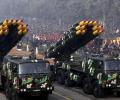
Global brokerage Jefferies forecasts a double-digit compound annual growth rate (CAGR) for India's defence spending, estimating a cumulative domestic opportunity of over $60 billion across four years, driven by geopolitical tensions and the government's indigenisation push.

External Affairs Minister S Jaishankar has publicly acknowledged India's intensified diplomatic efforts to resolve the Ukraine conflict, engaging directly with both Kyiv and Moscow. India is focusing on critical issues like Black Sea shipping safety, grain exports, and energy supplies, moving beyond its previous advocacy role. Jaishankar also highlighted India's historical ties with Russia and discussed the evolving global geopolitical landscape, including the repositioning of the US and the rise of China.

India has emerged as the most impacted market within emerging economies, experiencing $3.7 billion in outflows over the past three weeks, matching the total outflows from the entire emerging market basket, as global equity funds turn negative for the first time since January 2026 due to escalating geopolitical tensions.

Foreign Portfolio Investors (FPIs) withdrew Rs 13,138 crore from Indian equities in the first half of September, driven by heightened global uncertainty, rising crude oil prices, firm US bond yields, and a strong dollar, impacting risk appetite.
Indian benchmark indices Sensex and Nifty rebounded in early trade, tracking a recovery in global equity markets and an easing of hostilities between Israel and Iran, after a sharp fall in the previous session.

Engineering conglomerate Larsen & Toubro (L&T) announced a significant 32.5 per cent increase in consolidated net profit, reaching Rs 5,202.10 crore for the quarter ended September 2026, driven by robust revenue growth and a 28 per cent surge in order inflows.

Indian benchmark indices Sensex and Nifty closed lower for the second consecutive day, driven by investor caution over conflicting geopolitical signals from West Asia and fresh foreign institutional investor (FII) outflows.

Navigating this geopolitical minefield requires a cold-blooded blend of immediate tactical pleading, structural domestic diversification, and aggressive collective resistance, suggests Ambassador Rajasekhar.

'The Indian market has struggled over the past two years.' 'It peaked in September 2024, and although it has moved up and down since then, investors have not really made money.'

NavIC is India's independent, standalone navigation satellite system aimed at providing position, navigation and timing (PNT) services across India and around 1,500 km beyond the country's landmass.

Prime Minister Narendra Modi, during his Gujarat visit, pledged to serve India until his last breath. He criticised the Opposition for allegedly spreading panic regarding fertiliser and cooking gas availability amidst the West Asia conflict, accusing them of rejoicing in national crises. Modi also highlighted government efforts to shield farmers from rising global prices and inaugurated 'Bharat Parv 2026' at Ekta Nagar.

Russian President Vladimir Putin has arrived in India for a three-day visit to attend the BRICS summit and hold bilateral talks with Prime Minister Narendra Modi, focusing on expanding trade, investment, and energy cooperation amidst global geopolitical challenges.

Zoho Corporation has paused annual pay hikes and reduced marketing expenditure, citing a four-fold increase in server prices for AI infrastructure and an uncertain software sector outlook, according to founder Sridhar Vembu.

Aditya Birla Group Chairman Kumar Mangalam Birla stated on Tuesday that investments in artificial intelligence should be driven by potential returns, not by a "fear of missing out." Speaking at the 2026 Bloomberg New Economy Forum, Birla indicated that his group would adopt AI more gradually than previously planned, moving away from an "AI arms race" mentality. He also discussed the varied applications of AI across different business sectors, the challenges of capital allocation, and the impact of geopolitical events on global companies.

Gold futures saw a significant rise for the second consecutive day, driven by strong overseas market rallies, increased safe-haven demand due to geopolitical uncertainties, and a weaker US dollar. This surge coincided with the Reserve Bank of India's decision to maintain its repo rate, reflecting a focus on growth amidst global inflation concerns and easing oil prices.
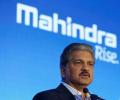
Bristlecone, a Mahindra Group company, reported a 24% year-on-year topline growth and aims for a billion-dollar valuation. The AI-powered supply chain services provider is expanding its offerings to include data analytics, AI, and product engineering, focusing on making supply chains more resilient for its global clients across high-tech, retail, manufacturing, and life sciences segments.
Indian benchmark indices Sensex and Nifty traded lower amid volatile trends, influenced by escalating geopolitical uncertainties in West Asia and fresh outflows from Foreign Institutional Investors (FIIs).

Indian stock market investors are closely monitoring crude oil prices, geopolitical developments in West Asia, and the implications of the US Sanctioning Russia and Iran Act, which could impose tariffs on countries, including India, that purchase Russian crude.

The Reserve Bank of India (RBI) has maintained its benchmark policy rate at 5.25 per cent for the fourth consecutive meeting, prioritising clarity on inflation trends, particularly concerning energy costs and geopolitical developments.
